

How Is Money Made With Cell Phone Games
Mobile Gambling is a $50b Industry. Merely Only 5% of Players are Pin money (Part 1)
Game developers are absent a big opportunity to pursue the separate 95%
IT seems like just yesterday I spent all of grade 11 calculus playing that pre-loaded Ophidian brave along my Nokia 3220.
Today, we download these games as apps direct to our phones and mobile gaming is a $50b industry. Compared to 2022 global ticket booth revenues of $40b, mobile gaming is bigger than Hollywood.
Qualification up 42% of the $110b worldwide gaming industriousness, mobile is the most lucrative and fastest growing gaming political program, exceeding some PC and Console revenue for the premier sentence ever in 2022.
Half of this gross comes from Asia– mostly China, Nihon, and Korean Peninsula, with North The States and Europe contributing $7b and $6b, respectively.
Devices, Developers, and the Democratization of Gaming
Ended 30% of each mobile apps are games– you have access to roughly 800,000 games in your sack right now if you consume an Apple or Humanoid phone. The smartphone has truly LED to the democratization of gameplay for consumers and distribution for creators, and everybody in this ecosystem wins.
As raisable devices improve, people upgrade their hardware and enjoy better mobile experiences– big screens, quicker rendition, high resolution. Developers progress more compelling apps on top of these twist features, directive to amend mobile gaming and entertainment. Amend consumer experiences fire continuing hardware improvements to draw an still bigger audience– creating inexperient opportunities for developers.
If selling more devices isn't plenty of an inducement, consider this: 75% — 90% of some iOS App Store and Google Play revenue comes from mobile game transactions, and there are over 200m mobile gamers in the US alone. While diversification is coming, mobile games and the developers who build them, are the lifeblood of Malus pumila and Google app stores.
75%-90% of some iOS App Store and Google Represent tax revenue comes from mobile game transactions
Opportunities for Developers of All Sizes
The biggest crippled publishers in the macrocosm, much as Nintendo, Sega, Sony, and Microsoft, have all brought their console classics to mobile, and mobile-number 1 giants like Supercell and Rovio have grown to get over multi million dollar companies.
Innovation is everywhere in raisable gaming– Netflix recently launched a Alien Things game to promote the release of flavor 2, and the late co-founders of Vine discharged an uber-habit-forming live trivia game called HQ, that allows players to win real cash for answering questions.
The exfoliation and fanciful possibilities make mechanized the virtually challenging segment of the gaming diligence today. Add in the quickest growing segment past receipts with the lowest barrier to launching… mobile is impossible to ignore for developers of any size.
Atomic number 3 a result, millions of individuals and small teams pass their time following a passion to create games, hoping to find an audience that will enjoy the finished product– from their fingertips to yours.
What's the Line of work Model?
Developing a moveable game is much cheaper than developing for PC or cabinet due to the greater simple mindedness of gameplay and because of game engines like Unity that can automatise common build features.
However, most games yet cost anywhere between $50,000 to concluded $2 million, and the level of detail that goes into the perfect UX and touch screen experience can be excruciating.
Crucial the path(s) a game will strike to make money is crucial. This is made more difficult as developers focussing on maintaining an best, authentic, experience for players… Deciding between player experience and monetization doesn't have to be a zero sum game, but balancing between some can be tricky.
Depending on game case, mobile devs generally revolve about a few key direct and collateral revenue streams that can constitute summed ahead in the diagram downstairs:
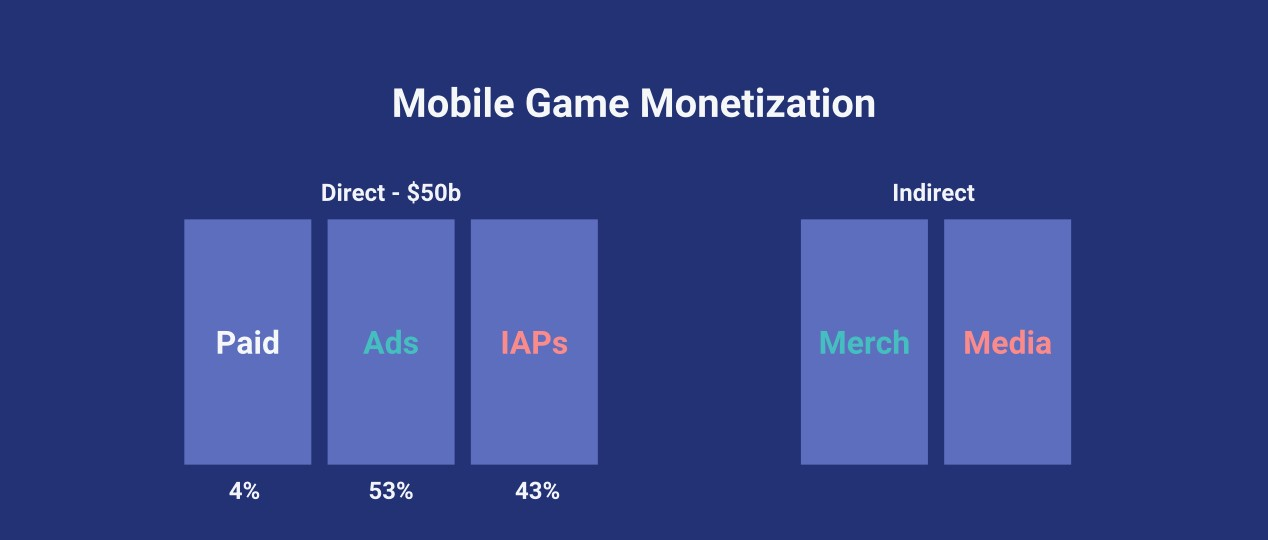
The numbers on a lower floor each pillar represent the percentage of gross that apiece of these categories contribute to the overall industry in aggregate.
Note: These revenue streams are non disjunctive– for example, a popular scheme for more free-to-work games is to merge an ad & IAP strategy, funnelling players to see ads until they've spent decent money connected IAPs.
Let's dive a spot deeper into each of these to identify the pros and cons, and where a major chance exists for game developers to crusade more than value for players.
Paid
Paid is the game monetization model we're often most familiar from PC and Console days– simply paying a certain amount of money up front to own a game. However in mobile gambling, paid games make up just 4% of overall receipts.
The predominant business model in mobile is Freemium– offer the game itself free of charge and monetizing players during gameplay via advertising or in-app purchases.
Paid games are often referred to as Exchange premiu Games because of the upfront investment they bid in a more often than not free-to-play world.
Example: Steal Low-pitched's Adventure by Snowman for $6.99

In-App Advertising
Making up 53% of the industry, in-game advertizing has become a common shape of monetisation for liberal-to-play games because it allows devs to maximise the figure of players they can monetize at a time (ie., I stern check that 90% of my monthly active users see an ad).
Mobile ads can come in many forms, from banner ads to rewards based ads that actually assist players in their gritty progress if they select to ascertain a sponsored video.
Ads are a really great and reliable mode to monetize a mobile game– it's basically because of this reliability, that we can get games gratis.
But despite recent innovations with rewards, ads don't attention deficit disorder a lot value to a game experience– as you might wait, they typically detract from it. Still, rewards settled ads point a shift toward a inferior intrusive and more engaging medium.
Example: View a picture to earn extra spins in Pirate Kings

In-App Purchases
The key to success in monetizing a free-to-play game has historically been to find the small segment of players who will spend money on digital in-app purchases.
Digital in-app purchases (IAPs) refers to allowing players to buy digital items or additive functionality within the game– for example, spend 99 cents for an duplicate life or $3.99 for a bundle of 5 lives. Most games have a "store" prominently located during gameplay and will prompt players to spend a small sum of money to make their lives easier.
IAPs make dormie 43%, or $22b, of the transferrable gaming industry today. Looking at iPhone gamers in isolation, IAPs account for roughly 60% of revenue generated from iOS users.
Illustration: Buy gems in Collide of Clans to build your base faster

The Problem with the Mobile Gaming Commercial enterprise
Mobile Gaming has a value-exchange problem.
The standardization of 'freemium' has made willingness to buy in games nigh negligible– 4% of the market.
Ads are lucrative and effective, making prepared 53% of taxation, but they aren't our first choice if we prioritize the gambling get. Players are Thomas More credible to try a free halting with ads, simply this comes with retention and engagement gamble that is unruffled being perfected by some of the biggest publishers in the world.
Mobile game developers operate in a world where players wait to have their game gratis, but lose hokey link when they see ads that help the developer make money for their work.
We regard parallels to this in the TV and Movie industriousness: you give the axe pay for premium content on Netflix and see no ads, Beaver State you tush watch free content connected traditional TV/Youtube with ads. Only you can't access free content with no ads.
In gaming, this leaves in-app purchases equally the main chemical mechanism for mutual value exchange– players buying supplemental game features at a set price. Making up 43% of revenue, this is the main way Mobile River game developers make money for adding value.
All the same, but about 5% of players spend money on in-app purchases .
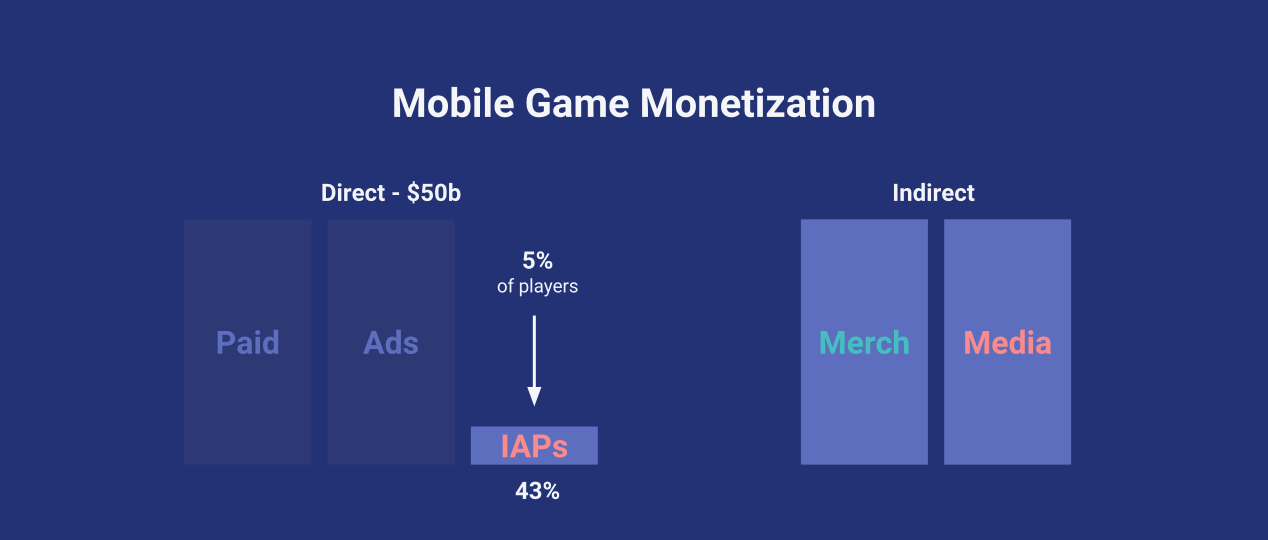
Mobile gaming is an industry where $22b out of $50b comes from 5% of players.
Mobile developers necessitate to spend more time thinking about how to ride esteem for the other 95% of players.
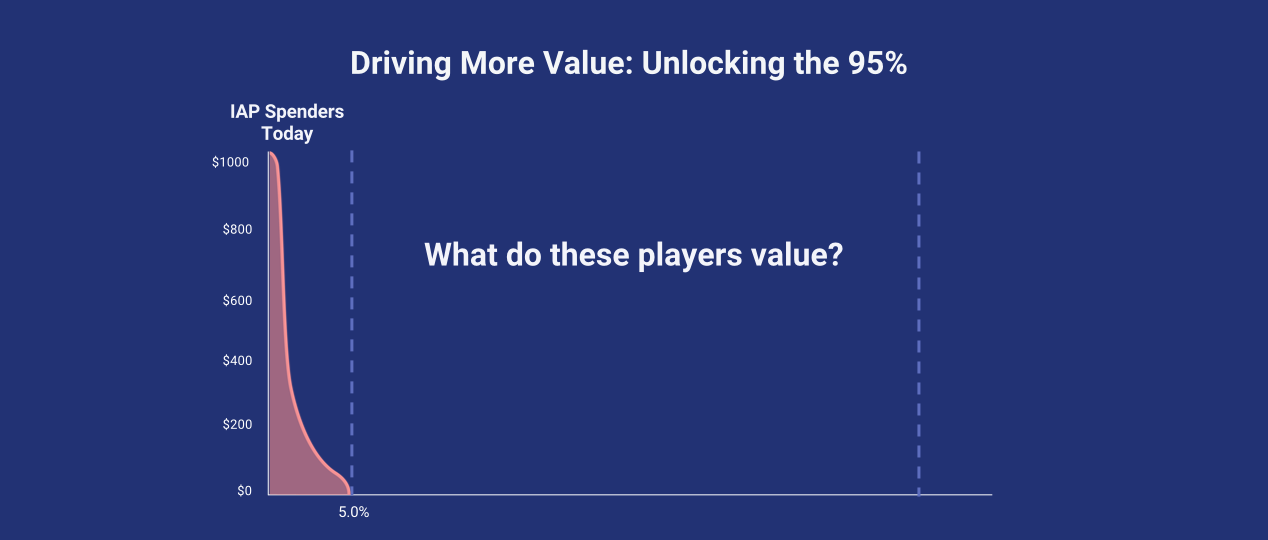
Now that we've done a deep dive and identified the trouble, I'll demonstrate you where a major opportunity exists in Part 2 next week… Follow this publication to give it a read when information technology's out!
To get a piece of a tip, have a look at Corey's post connected how Low's Take chances ready-made 60% of it's one-year merch revenue in 30 days .
Daniel Asper leads Gaming & VR/Argon partnerships at Shopify, centralized along helping developers bring their game worlds to the real life world through commerce.
How Is Money Made With Cell Phone Games
Source: https://medium.com/shopify-gaming/mobile-gaming-is-a-50b-industry-but-only-5-of-players-are-spending-money-f7f3375dd959
Posted by: gibbonsfescithavers.blogspot.com
0 Response to "How Is Money Made With Cell Phone Games"
Post a Comment